
Call us now :08045479140
 Send Inquiry
 Send Inquiry
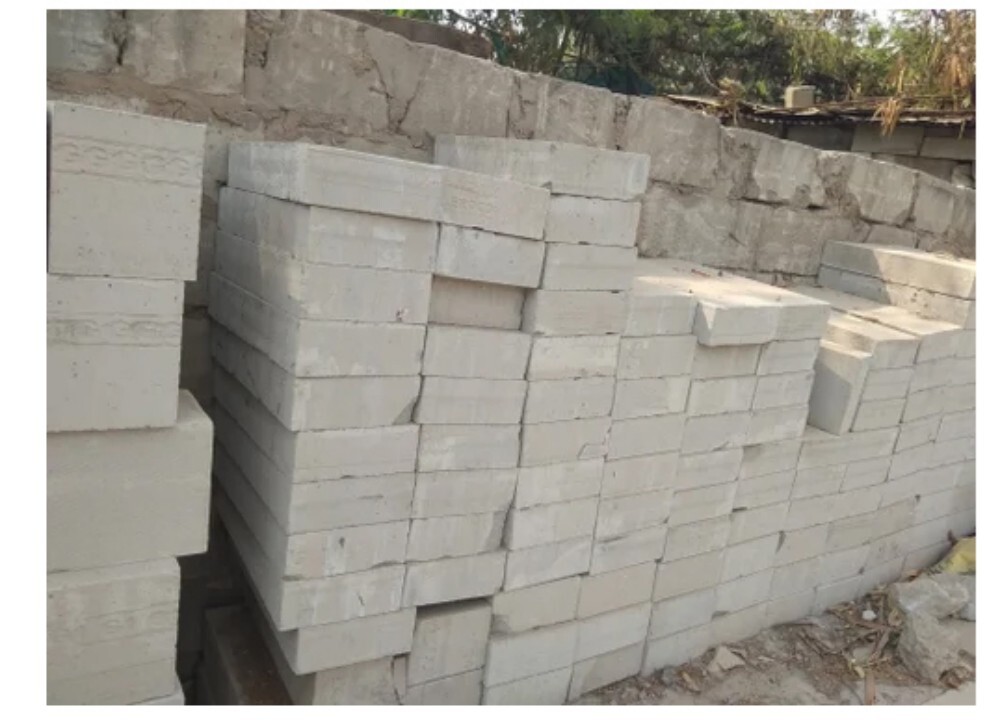
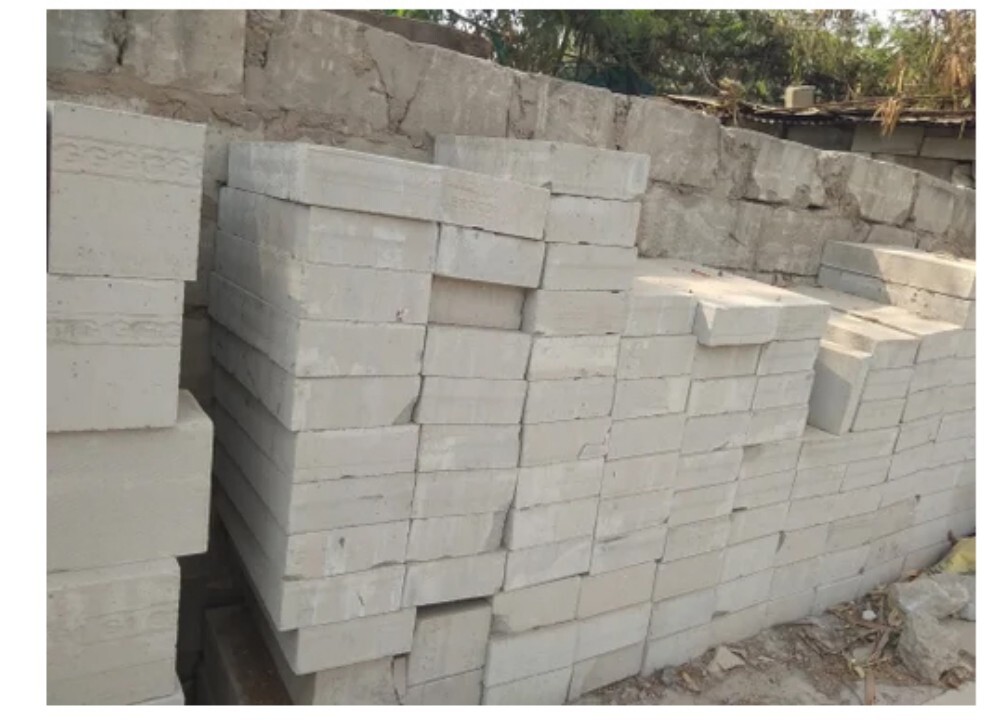
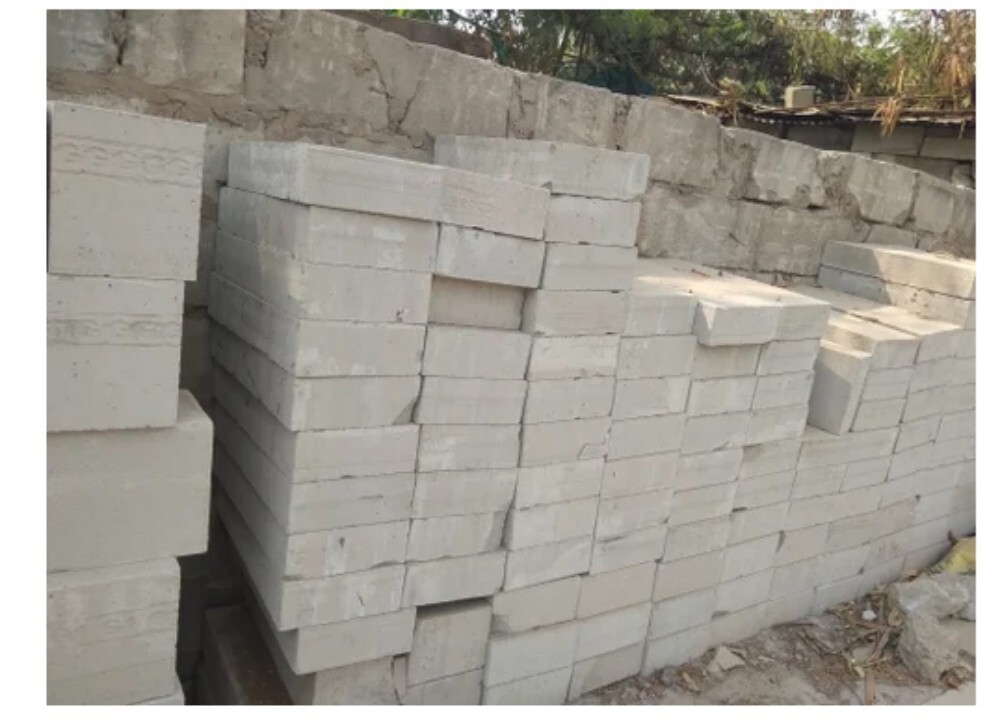
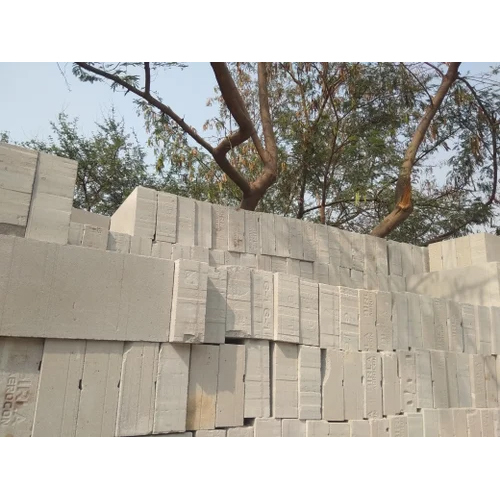
100 mm AAC Block
Price 64 INR/ Piece
MOQ : 50 Pieces
100 mm AAC Block Specification
- Type
- AAC Blocks
- Color
- Gray
- Density
- 40 Kilogram per cubic meter (kg/m3)
- Method
- Autoclaved Aerated Concrete
- Material
- Cement
100 mm AAC Block Trade Information
- Minimum Order Quantity
- 50 Pieces
- FOB Port
- delhi
- Payment Terms
- Cash in Advance (CID), Cheque
- Supply Ability
- 1000 Pieces Per Day
- Delivery Time
- 1 Week
- Packaging Details
- standard
About 100 mm AAC Block
A 100 mm AAC (Autoclaved Aerated Concrete) block isa lightweight, sustainable construction material made from a mixture of sand, cement, lime, fly ash, and aluminum powder, which is cured under high-pressure steam.This block, with a standard size often around 600x200x100mm, offers superior thermal insulation, fire resistance (up to four hours), and soundproofing, making it an excellent choice for non-load-bearing walls in various buildings.Its lightweight and porous structure also allows for easy cutting and installation, reducing construction time and energy costs.A 100 mm AAC (Autoclaved Aerated Concrete) block isa lightweight, sustainable construction material made from a mixture of sand, cement, lime, fly ash, and aluminum powder, which is cured under high-pressure steam.This block, with a standard size often around 600x200x100mm, offers superior thermal insulation, fire resistance (up to four hours), and soundproofing, making it an excellent choice for non-load-bearing walls in various buildings.Its lightweight and porous structure also allows for easy cutting and installation, reducing construction time and energy costs.Superior Insulation and Energy Efficiency
AAC blocks provide excellent thermal insulation, ensuring energy-efficient buildings that remain cool in summer and warm in winter. Their low density also contributes to soundproofing, creating more comfortable interiors.
Quick and Easy Installation Process
Thanks to their lightweight nature and precise dimensions, AAC blocks are simple to handle and install. This accelerates construction timelines and minimizes labor costs, ideal for large-scale projects.
Eco-Friendly Building Solution
Manufactured using environmentally responsible methods, AAC blocks help reduce carbon footprint. Their composition and production process utilize minimal natural resources, supporting sustainable development.
FAQs of 100 mm AAC Block:
Q: How are 100 mm AAC Blocks manufactured?
A: The 100 mm AAC Blocks are produced through the Autoclaved Aerated Concrete (AAC) method, which involves mixing cement with fine aggregates and introducing air by chemical reactions. The mixture is poured into molds, allowed to partially set, and then cured in a high-pressure autoclave to achieve the desired strength and consistency.Q: What are the primary benefits of using AAC blocks with 40 kg/m density?
A: AAC blocks with a 40 kg/m density are extremely lightweight, offering improved handling, lower structural load, and better insulation. This leads to energy savings, easier construction, and increased comfort within buildings.Q: When is it recommended to use these AAC blocks in building projects?
A: These AAC blocks are ideal for both load-bearing and non-load-bearing walls in residential, commercial, and industrial constructions. Their use is especially recommended where insulation, speed of installation, and structural efficiency are crucial.Q: Where are these AAC blocks typically supplied from in India?
A: Reputable manufacturers and suppliers based in India produce and distribute these AAC blocks across various regions, ensuring timely delivery to construction sites nationwide.Q: What is the process for installing AAC blocks in construction?
A: AAC blocks are usually set with thin-bed mortar, ensuring uniform joints and alignment. Their lightweight nature allows for rapid stacking and minimal labor effort. Once laid, the walls can be plastered or painted as required.Q: How do AAC blocks contribute to eco-friendly construction?
A: AAC blocks are produced using environmentally sustainable processes that consume less energy and natural resources compared to traditional bricks. Their use reduces the buildings overall carbon footprint and promotes green building practices.Q: What applications are most suitable for 100 mm gray AAC blocks made from cement?
A: These blocks are well-suited for partition walls, infill walls, internal and external structural walls, and other non-load-bearing applications that require enhanced insulation and fire resistance.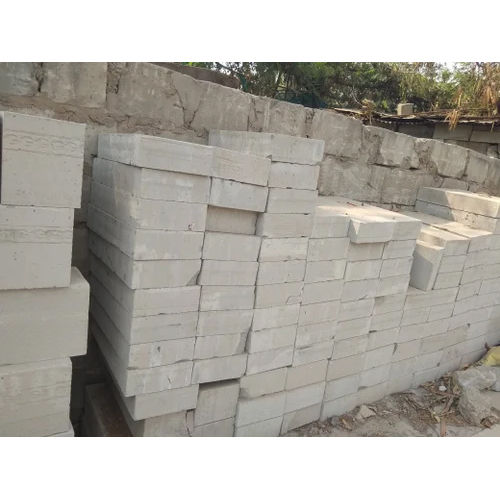
Tell us about your requirement

Price:
Quantity
Select Unit
- 50
- 100
- 200
- 250
- 500
- 1000+
Additional detail
Mobile number
Email

More Products in BIRLA AEROCON BLOCKS Category
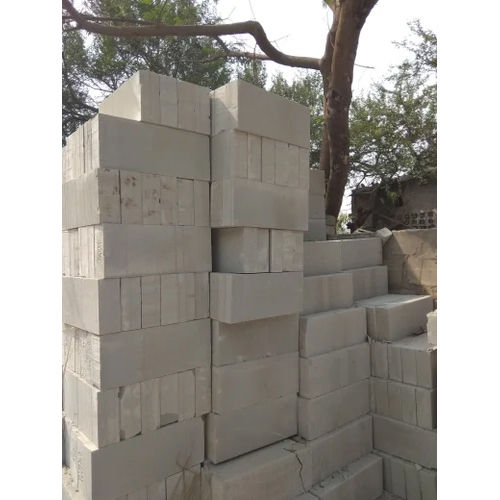
Building AAC Block
Price 65.0 INR / Piece
Minimum Order Quantity : 50 Pieces
Color : Gray
Density : 40 Kilogram per cubic meter (kg/m3)
Type : Other
Method : Autoclaved Aerated Concrete

Solid AAC Blocks
Price 3900 INR / Cubic Meter
Minimum Order Quantity : 50 Cubic Meters
Color : Gray
Density : 40 Kilogram per cubic meter (kg/m3)
Type : Other, AAC Blocks
Method : Autoclaved Aerated Concrete
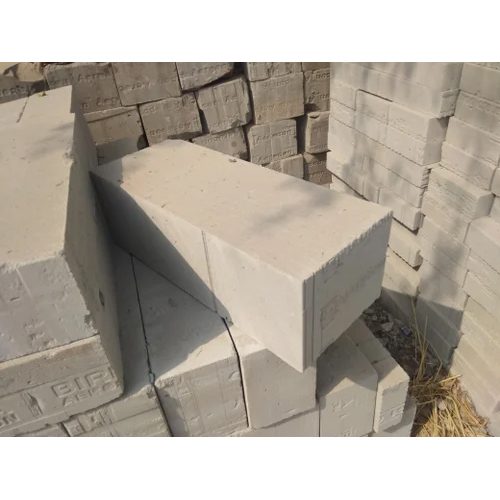
200 mm AAC Block
Price 98.0 INR / Piece
Minimum Order Quantity : 50 Pieces
Color : Gray
Density : 40 Kilogram per cubic meter (kg/m3)
Type : Other
Method : Autoclaved Aerated Concrete
Aerated Autoclaved Concrete Block
Price 65 INR / Piece
Minimum Order Quantity : 50 Pieces
Color : Gray
Density : 40 Kilogram per cubic meter (kg/m3)
Type : Other, AAC Blocks
Method : Autoclaved Aerated Concrete

We mainly deal in Delhi & North India.

 Send Inquiry
Our Products


Plot No. K 546, Near Gas Pump, Vasant Kunj Road, Mahipalpur Extn.,New Delhi - 110037, India

Mr. Shiv Charan Singh
(Proprietor)
Mobile :08045479140
 Send Inquiry
 Send SMS
Developed and Managed by Infocom Network Private Limited.
